Open Distance Learning (ODL) has become an important method of education for many students around the world. It allows learners to study from home while managing work, family responsibilities, and personal commitments. Although ODL provides flexibility and convenience, it also requires self-discipline, motivation, and effective study habits. Many students struggle with balancing their studies and daily life, especially when learning independently. Therefore, understanding how to engage successfully in Open Distance Learning is essential for academic success.
Understanding Open Distance Learning
Open Distance Learning is a system of education where students learn without attending regular face-to-face classes every day. Learning materials are usually provided through online platforms, printed modules, video lectures, and virtual discussions. Universities such as the Open University of Sri Lanka use this method to help students continue higher education while managing other responsibilities.
One of the main advantages of ODL is flexibility. Students can learn at their own pace and study according to their schedules. However, this flexibility can also become a challenge if students fail to manage their time properly.
Importance of Time Management
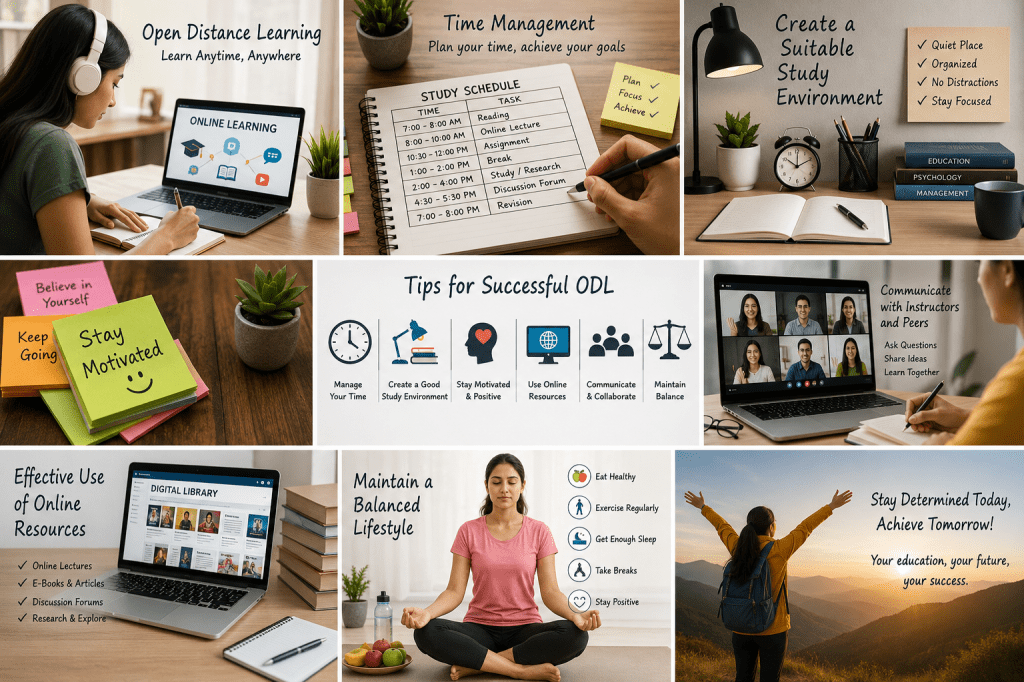
Time management is one of the most important skills in ODL. Since there are fewer direct classroom interactions, students must create their own study schedules. Without proper planning, assignments and examinations can quickly become stressful.
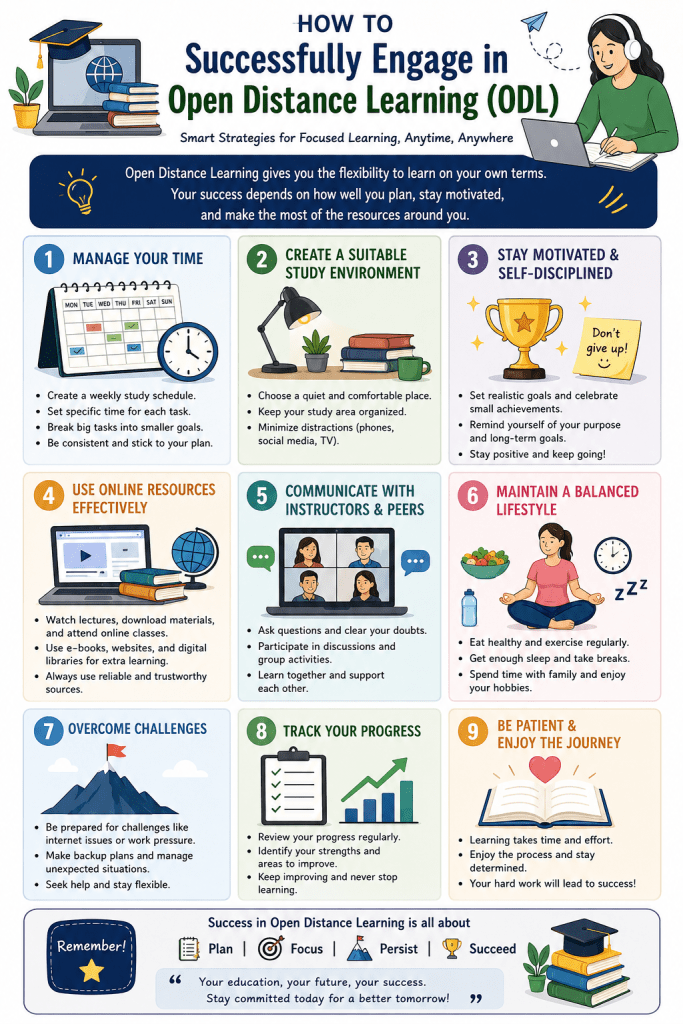
A practical way to manage time is by preparing a weekly study timetable. Students should allocate specific hours for reading, attending online sessions, completing assignments, and revising lessons. Breaking large tasks into smaller goals can also reduce stress and increase productivity.
For example, instead of studying an entire chapter in one day, students can divide it into smaller sections and complete them gradually throughout the week. This method makes learning easier and less overwhelming.
Creating a Suitable Study Environment
A peaceful and organized study environment can improve concentration and motivation. Students should choose a quiet place with minimal distractions. Keeping study materials, notebooks, and devices organized helps save time and maintain focus.
It is also important to reduce distractions from mobile phones and social media during study hours. Simple practices such as turning off notifications or using a timer for focused study sessions can increase efficiency.
Staying Motivated and Self-Disciplined
Self-motivation is essential in distance learning because students often study independently. Sometimes learners may feel tired, stressed, or discouraged, especially when balancing studies with work and family responsibilities.
Setting realistic goals can help maintain motivation. Celebrating small achievements, such as completing an assignment or finishing a difficult lesson, can increase confidence and encourage continuous learning.
Positive thinking is also important. Students should remind themselves why they started their educational journey and focus on their long-term goals. Support from family, friends, and classmates can also provide encouragement during difficult times.
Effective Use of Online Resources
Technology plays a major role in Open Distance Learning. Students should learn how to use online learning platforms effectively. Watching recorded lectures, downloading study materials, participating in discussion forums, and attending virtual classes can improve understanding of course content.
In addition, online resources such as educational videos, academic websites, digital libraries, and research articles can provide extra knowledge beyond course materials. However, students should use reliable and trustworthy sources when gathering information.
Communication with Instructors and Peers
Good communication is another key factor in successful ODL. Students should not hesitate to ask questions from lecturers or instructors when they face difficulties. Participating in online discussions and group activities can improve understanding and create a sense of connection with others.
Maintaining communication with classmates is also helpful. Study groups can encourage teamwork, discussion, and sharing of ideas. Learning together often makes studying more enjoyable and less stressful.
Maintaining a Balanced Lifestyle
Balancing studies with personal life is very important for mental and physical well-being. Students should avoid studying continuously without rest. Regular breaks, proper sleep, healthy meals, and physical activities can improve concentration and reduce stress.
Mental health should also be prioritized. Engaging in hobbies, spending time with loved ones, and practicing relaxation techniques can help students maintain emotional balance while studying.
Overcoming Challenges in ODL
Many students face challenges in Open Distance Learning, such as internet connection problems, lack of motivation, work pressure, and family responsibilities. These challenges can sometimes affect academic performance.
To overcome these difficulties, students should remain flexible and develop problem-solving skills. Preparing backup plans, downloading materials in advance, and seeking support when necessary can help manage unexpected situations effectively.
Conclusion
Open Distance Learning offers valuable opportunities for students to continue education in a flexible and convenient way. However, success in ODL depends largely on effective time management, self-discipline, motivation, communication, and the proper use of online resources. By creating healthy study habits and maintaining balance in life, students can overcome challenges and achieve their academic goals successfully.
Education is not only about attending classrooms; it is also about determination, responsibility, and continuous learning. With dedication and proper strategies, every student can succeed in Open Distance Learning.

 The Working Student Diaries
Leave a comment